 By admin
INTRODUCTION:
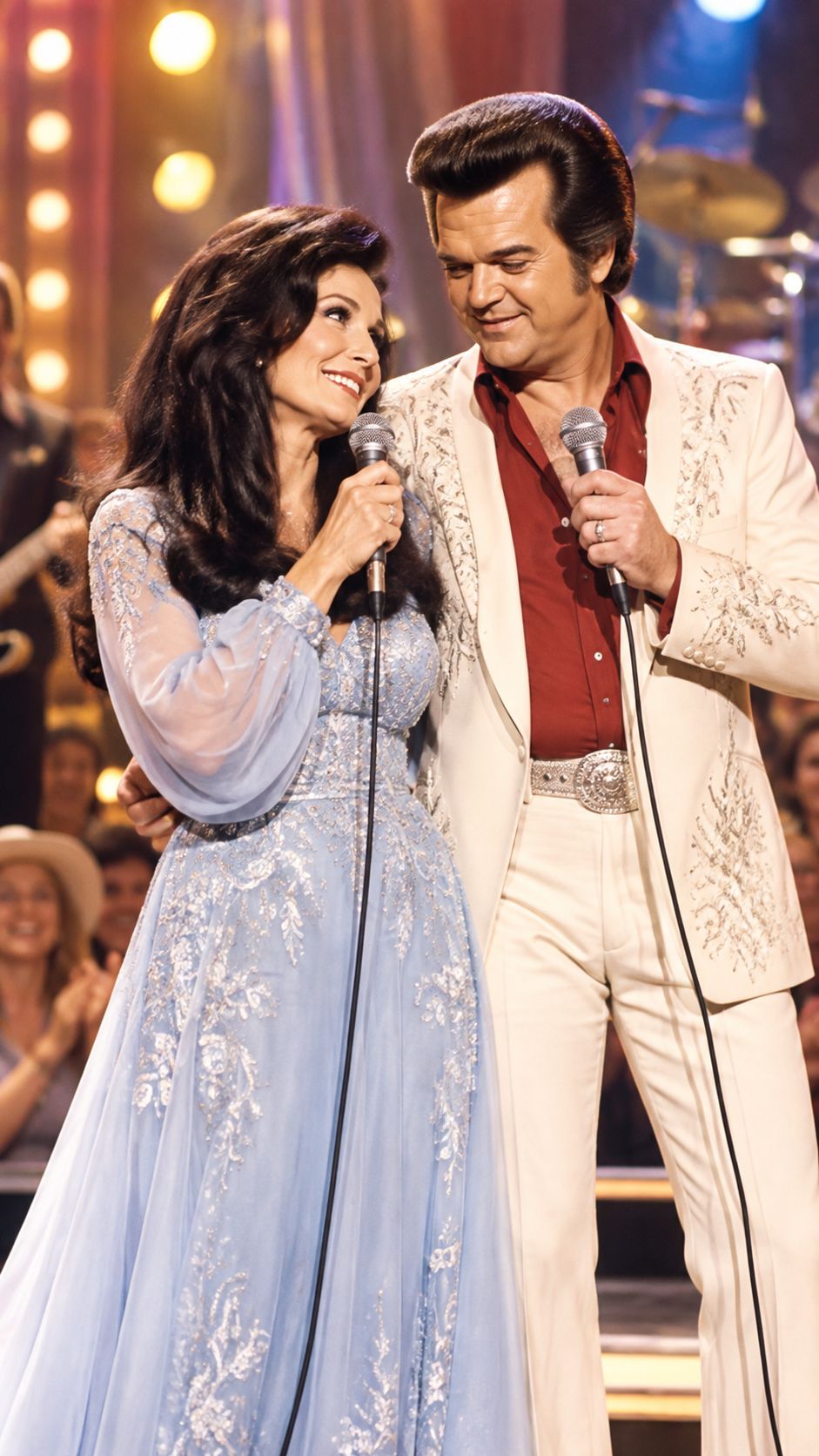
There are country music partnerships that sound good on paper.
And then there are partnerships that seem to create their own weather.
When Conway Twitty and Loretta Lynn walked into a recording studio together in the early 1970s, nobody could have known just how extraordinary the partnership would become. Two established stars. Two unmistakable voices. Two very different personalities. And somehow, when those voices met, the result was something country radio had rarely heard before.
It wasn’t simply harmony.
It was tension.
It was vulnerability.
It was two people singing about love, temptation, regret, marriage, betrayal and forgiveness as if they were living the stories themselves.
Between 1971 and 1981, Conway Twitty and Loretta Lynn built one of the most successful duet partnerships in country music history. Their collaboration produced five consecutive No. 1 country singles between 1971 and 1975, followed by a remarkable run of additional Top 10 hits. Their albums repeatedly reached the top of the country charts, while awards organizations repeatedly recognized them as one of country music’s defining vocal partnerships.
And the most astonishing part?
They weren’t supposed to sound this effortless together.
“Two completely different voices became one of country music’s most unforgettable conversations.”
It Started With a Song About a Love That Was Already Dying
The story truly exploded in 1971 with “After the Fire Is Gone.”
The song wasn’t a conventional romantic duet. It was darker and more complicated. Its characters are dealing with the emptiness that can appear when a relationship has lost its emotional spark.
That was precisely where Conway Twitty and Loretta Lynn were extraordinary.
They didn’t sing the song like detached performers.
They sounded like two people trapped inside it.
Released in January 1971, “After the Fire Is Gone” became their first No. 1 together on the U.S. country chart, spending two weeks at the top. The recording also crossed over to the Billboard Hot 100, where it reached No. 56, and it won the Grammy Award for Best Country Performance by a Duo or Group with Vocal.
That first No. 1 wasn’t merely a successful single.
It was the beginning of a phenomenon.
The song reached No. 1 on March 27, 1971, establishing a partnership that would dominate country duet music for years.
And they weren’t finished.
Not even close.
Then They Did Something Almost Nobody Expected
After their first chart-topper, Twitty and Lynn followed with another No. 1: “Lead Me On.”
The recording reached the top of the Billboard country chart in 1971, while the album Lead Me On climbed to No. 2 on the U.S. country albums chart and eventually received Gold certification.
Think about what was happening.
They had already proved that their voices worked together.
Now they were proving it wasn’t a fluke.
Their records weren’t simply succeeding because listeners were curious about two famous singers collaborating. The emotional chemistry was becoming a defining part of the music.
Their voices worked because they contrasted.
Twitty’s delivery could sound smooth, controlled and conversational. Lynn’s voice could carry vulnerability, defiance and emotional grit. Instead of competing, those qualities created dramatic tension.
One voice would push.
The other would answer.
And suddenly a country song sounded like a private argument happening in the middle of someone’s living room.
That was the secret.
Five Straight No. 1s
Then came the run that transformed their partnership into country music history.
“After the Fire Is Gone” — No. 1.
“Lead Me On” — No. 1.
“Louisiana Woman, Mississippi Man” — No. 1.
“As Soon as I Hang Up the Phone” — No. 1.
“Feelins’” — No. 1.
Five consecutive No. 1 country singles between 1971 and 1975.
That is the statistic that tells the story better than any dramatic headline ever could.
And the songs weren’t carbon copies.
“Louisiana Woman, Mississippi Man” brought a playful, restless energy.
“As Soon as I Hang Up the Phone” leaned into emotional storytelling.
Then came “Feelins’”, another No. 1 that demonstrated how naturally their voices could move between tenderness and conflict.
The duo had created something bigger than a collection of hit records.
They had created recognizable characters.
When listeners heard Conway and Loretta, they knew they were entering a world where love was rarely simple.
The Stage Chemistry Became Part of the Legend
Their success wasn’t confined to vinyl records or radio charts.
Onstage, Conway Twitty and Loretta Lynn developed a chemistry that audiences immediately understood.
They teased each other.
They exchanged knowing looks.
They played with the emotional tension inside their songs.
The performances could be funny one moment and heartbreaking the next.
That theatrical quality helped turn their appearances into events.
It also contributed to speculation from some fans about whether their relationship was more than professional. Contemporary accounts and later retrospectives have emphasized that the two were close friends and musical partners, rather than romantic partners. Their public chemistry simply made the performances convincing.
And perhaps that is what made the partnership so powerful.
They didn’t need to be lovers in real life.
They only needed to make the audience believe the characters in the songs.
They did.
The Awards Started Following the Records
The industry noticed.
From 1972 through 1975, Conway Twitty and Loretta Lynn were named the Country Music Association’s Vocal Duo of the Year for four consecutive years. The Academy of Country Music also recognized them as Best Vocal Duet in multiple years, while the American Music Awards named them Favorite Country Duo in 1975, 1976 and 1977.
These weren’t isolated victories.
They reflected something bigger: audiences and industry voters were repeatedly recognizing the same partnership.
The chart success continued, too.
Their discography ultimately included 10 studio albums together and 13 singles, with 12 of those singles reaching the Top 10 of the Billboard Hot Country Singles chart and five reaching No. 1.
Even after their five consecutive chart-toppers, the hits didn’t disappear.
“The Letter” reached No. 3 on the U.S. country chart in 1976 and No. 1 in Canada.
Later, “You Know Just What I’d Do” reached No. 9 in the United States, while “It’s True Love” reached No. 5.
In other words, the phenomenon had longevity.
They weren’t simply a one-season sensation.
What Made Them Different?
This is where the numbers only tell half the story.
The deeper reason Conway Twitty and Loretta Lynn mattered was emotional realism.
Country music has always understood heartbreak.
But these two understood conversation.
Their best duets didn’t feel like one singer waiting for the other to finish.
They sounded like people responding to each other.
That distinction mattered.
Listen closely to their recordings and you can hear the characters negotiating with one another. Sometimes they’re flirting. Sometimes they’re fighting. Sometimes they’re making excuses. Sometimes they’re admitting that the relationship is already broken.
And sometimes they’re simply trying to hold on.
“The magic wasn’t that Conway and Loretta sounded alike. The magic was that they sounded completely different—and somehow made those differences feel necessary.”
That is why their records have endured.
The Legacy Behind the Numbers
The phrase “shattered every record in country music” is deliberately dramatic. No single partnership literally broke every record in the genre.
But the historical numbers explain why such a phrase became tempting.
Five consecutive No. 1 country singles.
Twelve Top 10 country singles.
Multiple No. 1 albums.
Four consecutive CMA Vocal Duo of the Year awards.
Multiple ACM and American Music Award victories.
And a partnership that remained commercially relevant across much of the 1970s and into the 1980s.
Those numbers are remarkable on their own.
But statistics cannot fully explain why people still remember them.
For that, you have to listen.
Listen to “After the Fire Is Gone”, and you hear desperation.
Listen to “Lead Me On”, and you hear temptation.
Listen to “Louisiana Woman, Mississippi Man”, and you hear excitement.
Listen to “As Soon as I Hang Up the Phone”, and you hear emotional conflict.
Listen to “Feelins’”, and you hear two performers completely surrendering themselves to the story.
That was the real achievement.
They didn’t simply make records that climbed charts.
They made listeners feel as though they were overhearing something private.
And That’s Why the Story Still Hurts
Conway Twitty died in 1993 at the age of 59, while Loretta Lynn continued performing and recording for decades before her death in 2022.
Their era eventually disappeared.
The television appearances became memories.
The record-store shelves changed.
Music formats transformed.
New generations of country singers arrived.
But those voices remained.
Because great country music doesn’t depend entirely on the decade in which it was recorded.
It depends on whether somebody hears themselves in the story.
And somewhere, decades later, a listener can still hear Conway Twitty sing a line, hear Loretta Lynn answer him, and suddenly feel the same emotional tension that audiences felt in the 1970s.
That is the extraordinary part.
Not that they had five No. 1s.
Not that they collected awards.
Not even that they became one of country music’s most successful duet partnerships.
It is that they turned two voices into a conversation that still feels alive.
“The records were made decades ago. The emotions never learned how to age.”
And perhaps that is the greatest record Conway Twitty and Loretta Lynn ever shattered:
The belief that a country duet is simply two singers sharing a microphone.
They proved it could be something much bigger.
A story.
A confrontation.
A confession.
A love song.
A heartbreak.
Sometimes all in the same three minutes.
And when those two voices met, country music didn’t just hear a duet.
It heard two people telling the truth about the complicated business of being human.
VIDEO: