 By admin
INTRODUCTION:
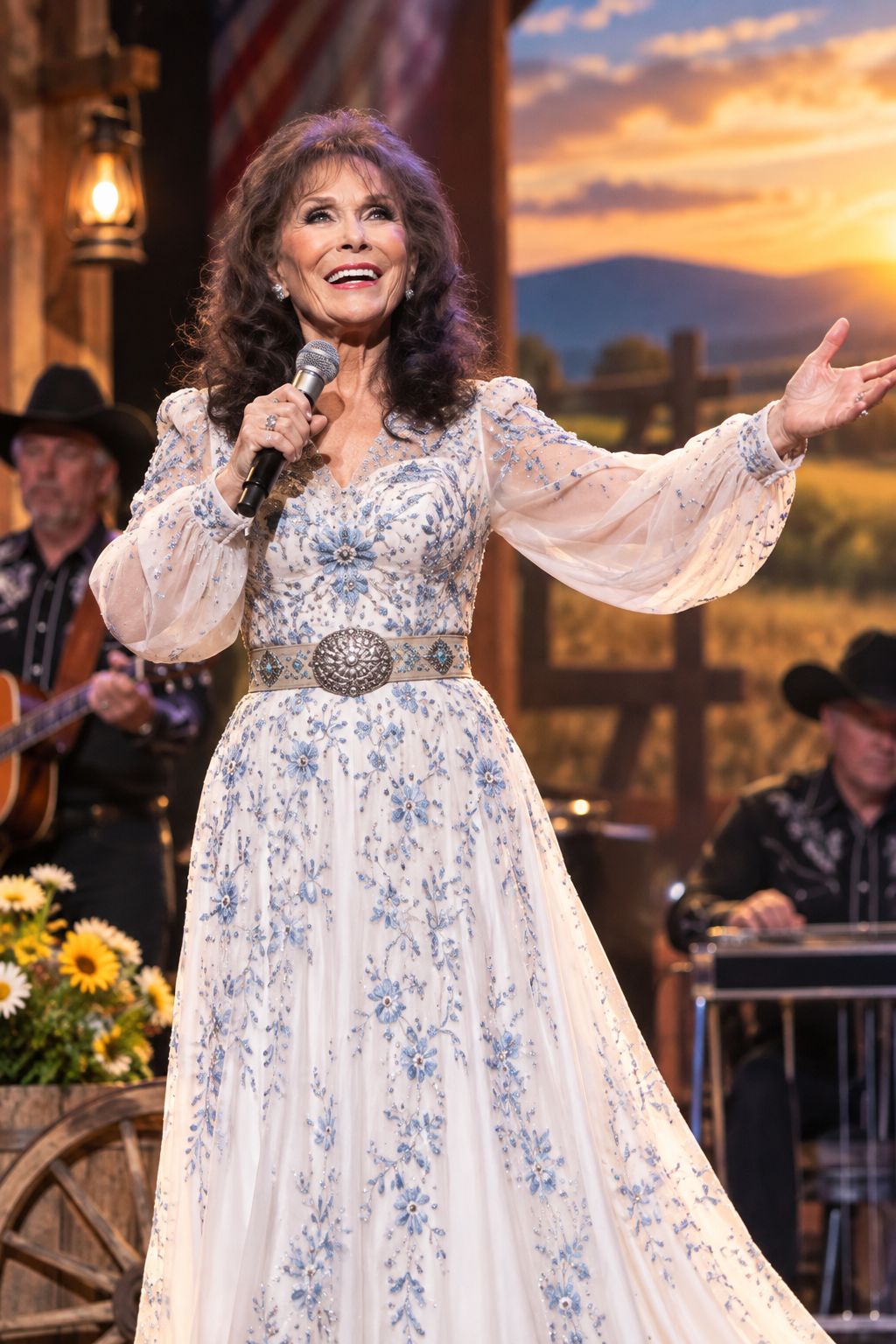
There are moments in country music when a song becomes bigger than the singer who recorded it.
Loretta Lynn’s “The Pill” was one of those moments.
When the song arrived in 1975, it didn’t sound like a revolution at first. It was playful. Funny. Almost mischievous. But underneath the bright country arrangement was something Nashville was not accustomed to hearing from a woman:
A wife celebrating the freedom to make decisions about her own body.
And that was enough to make radio programmers nervous.
Many stations refused to play the record, with reports placing the number at more than 60 stations. Yet the attempted silencing had an unexpected consequence: the controversy made people want to hear it even more.
More than five decades later, “The Pill” remains one of the most fascinating songs in country music history—not simply because it was controversial, but because it revealed exactly how powerful a woman’s voice could become when she refused to apologize for telling the truth.
Before “The Pill,” Loretta Lynn Had Already Been Breaking the Rules
To understand why “The Pill” caused such an uproar, you have to understand Loretta Lynn.
She wasn’t an outsider standing at the edge of country music throwing stones at Nashville.
She was Nashville.
And that made her rebellion even more remarkable.
Lynn built her career by writing and singing about things many women were expected to keep private: cheating husbands, unhappy marriages, loneliness, sexual double standards, jealousy, exhaustion and the complicated realities of being a wife.
Songs such as “Don’t Come Home A-Drinkin’ (With Lovin’ on Your Mind)” and “Rated ‘X’” confronted subjects that were uncomfortable even by modern standards.
The Library of Congress has noted that Lynn ultimately had more songs banned from country radio than any other artist, male or female.
That history matters.
Because “The Pill” didn’t suddenly turn Loretta into a controversial artist.
She had been telling uncomfortable truths for years.
But this time, she wasn’t merely confronting a bad husband.
She was singing about female autonomy.
And that was a different kind of threat.
The Song That Nashville Didn’t Know How to Handle
“The Pill” was recorded years before its 1975 release, with its release reportedly delayed amid concerns about the reaction it might provoke.
The premise was startlingly simple.
A married woman, exhausted by repeated pregnancies and the expectations placed upon her, discovers birth control and suddenly feels that her future belongs to her again.
The song doesn’t present this as a solemn political manifesto.
Instead, Lynn uses humor.
She turns frustration into swagger.
She turns domestic exhaustion into liberation.
And she gives the woman in the song something country music had not always allowed female characters to possess:
choice.
“For once, the woman wasn’t waiting for somebody else to decide her future.”
That was the real controversy.
It wasn’t simply that Lynn mentioned contraception.
It was that the woman liked having control over her life.
That distinction is crucial.
One analysis of the song argues that the controversy was fundamentally about the freedom represented by the pill rather than merely the word itself.
And suddenly, a country song had become a conversation about power.
Why Radio Programmers Were So Afraid
Country radio in the 1970s was deeply connected to the cultural expectations of its audience.
Many programmers believed the song was too provocative for conservative listeners. Some feared it promoted promiscuity or challenged traditional family values.
So stations simply refused to play it.
Imagine that today.
A superstar releases a new single.
Fans want to hear it.
The record company wants it promoted.
But radio executives decide:
Not this one.
Yet something unexpected happened.
Women heard about the song anyway.
Word spread.
People talked about it.
And according to historical accounts, the record sold roughly 15,000 copies per week through word of mouth and underground FM support during the controversy.
The attempted blackout couldn’t stop the audience.
In fact, it helped create curiosity.
And curiosity became demand.
The Women Heard Something Men in Radio Didn’t
Perhaps the most important part of “The Pill” wasn’t the controversy.
It was the reaction from women.
Loretta Lynn understood something that many radio executives apparently didn’t:
Women recognized themselves in her songs.
The woman singing “The Pill” wasn’t a glamorous celebrity living an imaginary life.
She was a wife.
A mother.
A woman who had spent years doing what society expected.
And now she was saying:
What about me?
PBS’s American Masters describes Lynn’s work as giving voice to women moving from traditional domestic expectations toward greater independence. Sheryl Crow has also credited Lynn with helping break down barriers for women who came after her.
That’s the deeper story behind the song.
Lynn didn’t need to call herself a political revolutionary.
She simply wrote about what women were experiencing.
And sometimes honesty is more disruptive than ideology.
The Irony: Radio Couldn’t Silence a Hit
Here’s where the story becomes almost poetic.
Despite the resistance, “The Pill” became a major success.
It reached No. 5 on the Billboard Hot Country Singles chart and became Lynn’s highest-charting single on the Billboard Hot 100, reaching No. 70 there. It also reached No. 1 in Canada.
Think about that.
A song some stations didn’t want their listeners to hear became impossible to ignore.
Once the record became a major hit, stations had a problem.
Their listeners wanted it.
Their competitors were playing it.
And suddenly, refusing to play Loretta Lynn wasn’t simply a moral decision.
It was bad radio business.
PBS notes the basic irony clearly: “The Pill” was banned, but once it became a chart hit, stations had to play it.
The audience won.
But Was “The Pill” Really “Banned”?
There is an important historical nuance here.
Modern headlines sometimes describe “The Pill” as though the entire country music industry imposed one official nationwide ban.
That’s not quite accurate.
The record faced widespread station-level refusal and blacklisting, but there was no single national authority issuing a universal ban. Some stations eventually added the song after its popularity became undeniable.
That distinction actually makes the story more interesting.
The battle wasn’t simply:
Loretta Lynn vs. Country Music.
It was more complicated.
It was Loretta Lynn confronting individual gatekeepers who believed they knew what their audiences should—and shouldn’t—hear.
And that is a recurring story throughout music history.
Loretta Lynn’s Greatest Weapon Was Never Shock
It would be easy to remember “The Pill” simply as a provocative 1970s novelty.
That would be a mistake.
Loretta Lynn’s greatest weapon wasn’t controversy.
It was authenticity.
She didn’t write about women’s freedom from an ivory tower.
She wrote about women she knew.
She wrote about marriages.
Kitchen tables.
Children.
Infidelity.
Work.
Money.
Loneliness.
Desire.
And frustration.
She took the ordinary lives of working-class women and treated them as worthy of being turned into hit records.
That was revolutionary in its own quiet way.
She didn’t ask country music for permission to tell women’s stories. She simply told them.
And millions of listeners understood.
The Legacy Is Bigger Than One Song
Today, “The Pill” is often discussed as a landmark feminist country song.
Its influence can be heard in generations of female country artists who became more willing to sing about subjects that once made Nashville uncomfortable. PBS specifically connects Lynn’s boundary-breaking work to later women artists, including Sheryl Crow.
And that may be Lynn’s greatest legacy.
She demonstrated that a woman could sing about difficult subjects without abandoning country music’s storytelling tradition.
She didn’t have to stop being country to talk about female freedom.
She simply expanded what country music was allowed to say.
And perhaps that’s why the song still feels powerful.
Because the argument at its center isn’t really about a pill.
It’s about who gets to make decisions.
Who gets to speak.
Who gets to tell the truth.
And who gets to decide which truths are acceptable for women to sing about.
The Woman They Tried to Silence Became Impossible to Ignore
Loretta Lynn died in 2022 at age 90, but her music continues to provoke conversations about women, country music and the boundaries imposed on artists.
“The Pill” remains one of the clearest examples.
Radio could refuse to play it.
Gatekeepers could criticize it.
Conservatives could condemn it.
But they couldn’t erase the feeling that made the song connect with women in the first place.
Loretta Lynn understood something incredibly important:
Sometimes the most powerful rebellion isn’t shouting louder.
Sometimes it’s simply telling the truth about your own life.
And when enough people recognize themselves in that truth, no gatekeeper can keep it quiet forever.
They tried to keep Loretta Lynn’s voice off the radio. Instead, they helped make her message impossible to forget.
That is the shocking truth behind “The Pill.”
It wasn’t merely a controversial country song.
It was a woman saying, for perhaps the first time on such a massive country stage, that her life belonged to her.
And country music was never quite the same afterward.
VIDEO: