 By admin
INTRODUCTION:
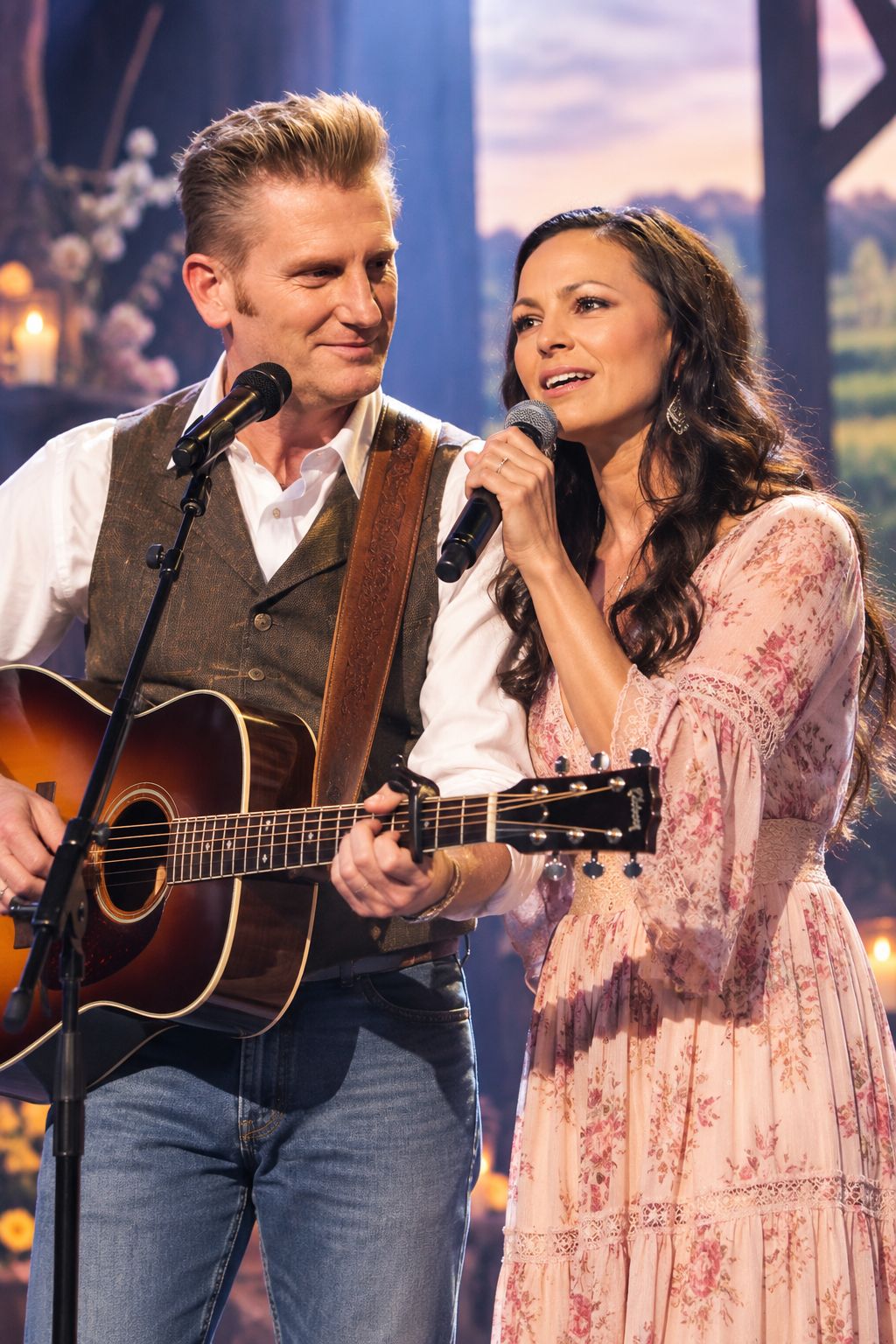
There are country songs that make you cry because the lyrics are sad.
And then there are songs that become almost unbearable because life itself seems to have rewritten the lyrics around them.
For Joey and Rory Feek, “When I’m Gone” became that kind of song.
Originally recorded in 2012, years before Joey’s devastating cancer diagnosis, the song was written as a gentle goodbye from someone facing death. Joey sang the lead, while Rory stood beside her. At the time, it was a beautiful country ballad about love, loss and the promise that life would continue.
Neither of them could have known how painfully prophetic it would become.
Years later, Joey would be diagnosed with Stage IV cervical cancer. She died on March 4, 2016, leaving Rory and their young daughter, Indiana, behind. And suddenly, the song they had once recorded as a story became something far more intimate: a musical farewell between two people who knew they were running out of time.
The Song Was Never Supposed to Be About Them
The story begins with songwriter Sandy Lawrence, a friend of Joey’s.
Lawrence wrote “When I’m Gone” while dealing with her own mother’s battle with cancer. The song imagined a dying woman reassuring the people she loved that, although her absence would hurt, they would eventually be okay.
When Joey and Rory heard it, something about the song immediately connected with them.
Joey reportedly worried that she didn’t have the vocal range for it.
The answer was simple:
“You do.”
At that moment, there was no way anyone could have imagined what the song would eventually mean.
Joey + Rory recorded “When I’m Gone” for their 2012 album His & Hers. It was released years before Joey’s cancer diagnosis, when the couple was simply another husband-and-wife country duo telling stories through music.
But even then, the song carried an unusual emotional weight.
It wasn’t really about death.
It was about what love sounds like when death is unavoidable.
Then They Made the Music Video
This is where the story becomes almost haunting.
When Joey and Rory filmed the music video, the director suggested that Joey should sing the song directly to Rory as though she were the person who was dying.
Rory initially resisted.
The idea was too uncomfortable.
Too personal.
Too close.
But eventually, he understood that the emotional honesty of the scene was exactly what the song required.
So the cameras rolled.
Joey sang.
Rory listened.
And they imagined a world in which she was gone and he was left behind.
At the time, it was only an imagined tragedy.
Years later, it would become reality.
That is what makes watching the video today so difficult.
You aren’t simply watching two country singers perform.
You’re watching a married couple unknowingly rehearse the goodbye that would eventually become one of the most painful moments of their lives.
The Diagnosis Changed Everything
In 2014, Joey was diagnosed with cervical cancer. After treatment and surgery, the cancer eventually returned, and her condition became terminal.
By 2015 and early 2016, Joey and Rory were no longer living the ordinary life they had known.
Their priorities became smaller and somehow more meaningful.
Family.
Faith.
Their daughter.
Music.
One more conversation.
One more kiss.
One more day.
Rory later described how deeply the song had changed after Joey became seriously ill.
The words were no longer hypothetical.
They were becoming instructions for surviving the future.
“He knew I would need her to tell me goodbye… not just once, but a thousand times.”
That reflection captures the extraordinary emotional power of “When I’m Gone.” For Rory, the recording became something more than a song. It became a way for Joey’s voice to remain present after she could no longer be.
Their Final Record Was Almost Impossible to Make
Joey’s illness did not stop her from wanting to make music.
Instead, it gave the music a completely different purpose.
The couple recorded Hymns That Are Important to Us in 2015, while Joey was undergoing treatment and becoming increasingly weak. The album would ultimately become their final studio project together.
They recorded wherever Joey was comfortable — including their home and hotel rooms — working around her health and energy.
Rory described the project as something Joey wanted to preserve because these were the songs she returned to for comfort.
And that detail matters.
Joey wasn’t simply trying to finish another album.
She was leaving something behind.
A voice.
A collection of songs.
A piece of herself for Rory, for Indiana and for everyone who loved her.
“When I’m Gone” was included again with the album, making its message even more powerful.
Their Last Bow Wasn’t Just a Performance
Rory later described Valentine’s Day 2016, only weeks before Joey’s death, in heartbreaking terms.
That day marked the anniversary of their first date in 2002.
Their relationship had begun with an invitation to a Valentine’s gathering. Two months later, they were engaged. Two months after that, they were married.
Fourteen years later, everything was different.
Joey was in hospice care.
She could barely eat.
She slept much of the time.
The ordinary romantic dinner Rory once imagined was no longer possible.
Instead, he wanted to hold her hand and revisit their life together through photographs and videos.
And he remembered their music.
Their first songs.
Their years on stage.
Their final performances.
Their final bow.
Their final songs together.
It is almost impossible to imagine the emotional weight of that memory.
They had spent years singing about love.
Now they were living its hardest verse.
The Cruelest Irony in Country Music
There is something uniquely heartbreaking about “When I’m Gone.”
The song was never written specifically for Joey.
It wasn’t inspired by her diagnosis.
It wasn’t created as a farewell to Rory.
It existed before their tragedy.
And yet, when Joey became terminally ill, its lyrics seemed almost eerily designed for their story.
That is why Rory didn’t treat the song simply as something painful.
He saw it as a gift.
A recording that would allow Joey to speak to him even after she was gone.
“How many men who are losing the woman they love get a gift like that?”
It’s difficult to think of a more devastating question.
Because Rory wasn’t talking about a hit record.
He was talking about having one last conversation with the person he loved.
And because Joey’s voice was preserved forever, he would always have the ability to hear her again.
A Love Story Bigger Than Country Music
Joey and Rory were never the biggest stars in Nashville.
They didn’t need to be.
Their appeal came from something more intimate.
They felt real.
Their music often sounded like two people sitting across from each other rather than two performers trying to impress an arena.
Their marriage became part of their artistic identity, but their story ultimately transcended celebrity.
It became about commitment.
About choosing someone again and again.
About staying when circumstances become frightening.
About discovering that love isn’t always about preventing loss.
Sometimes, love is about helping someone walk through it.
That is why their story still resonates.
Because eventually, almost everyone understands some version of goodbye.
The Song Lives On
Joey died on March 4, 2016.
But “When I’m Gone” did not end with her.
It became one of the most enduring pieces of the Joey + Rory story, precisely because the song contains something more powerful than grief.
It contains reassurance.
The central message isn’t simply I’m leaving.
It’s you will survive my leaving.
And perhaps that is why the song hurts so much.
Because Rory survived.
Their daughter grew.
The photographs remained.
The recordings remained.
And Joey’s voice remained.
Years later, Rory reflected on the music video they made in 2012 and recognized how extraordinary it was that they had unknowingly created an image of the future. He wrote that the video had eventually become reality — with one important difference: he wasn’t completely alone. Their daughter Indiana was beside him.
That detail transforms the story from pure tragedy into something more complicated.
Grief remained.
But so did love.
Why “When I’m Gone” Still Breaks Hearts
The greatest country songs often tell us something we already know but don’t want to admit.
People leave.
Time passes.
Families change.
Love doesn’t guarantee forever in the physical sense.
Joey and Rory’s story simply placed those truths under a brighter spotlight.
“When I’m Gone” was recorded when they thought they were telling someone else’s story.
Then life turned around and handed the story back to them.
And when Joey sang those words, she could never have known how many times Rory would eventually need to hear them.
Today, the song can be heard as a final conversation between two people who loved each other deeply.
Not because the song predicted Joey’s death.
But because they gave it a meaning far beyond what anyone could have imagined.
And perhaps that is the most beautiful thing about their story.
Joey didn’t get to stay.
But she left Rory something that could.
Her voice.
Her songs.
Her memories.
And a final musical reminder that even after the person you love is gone, the love itself doesn’t disappear.
It simply changes where it lives.
Some songs are recorded for an album.
Some songs become memories.
And some songs become the goodbye you never wanted to say.
For Joey and Rory, “When I’m Gone” became all three.
VIDEO: