 By admin
INTRODUCTION:
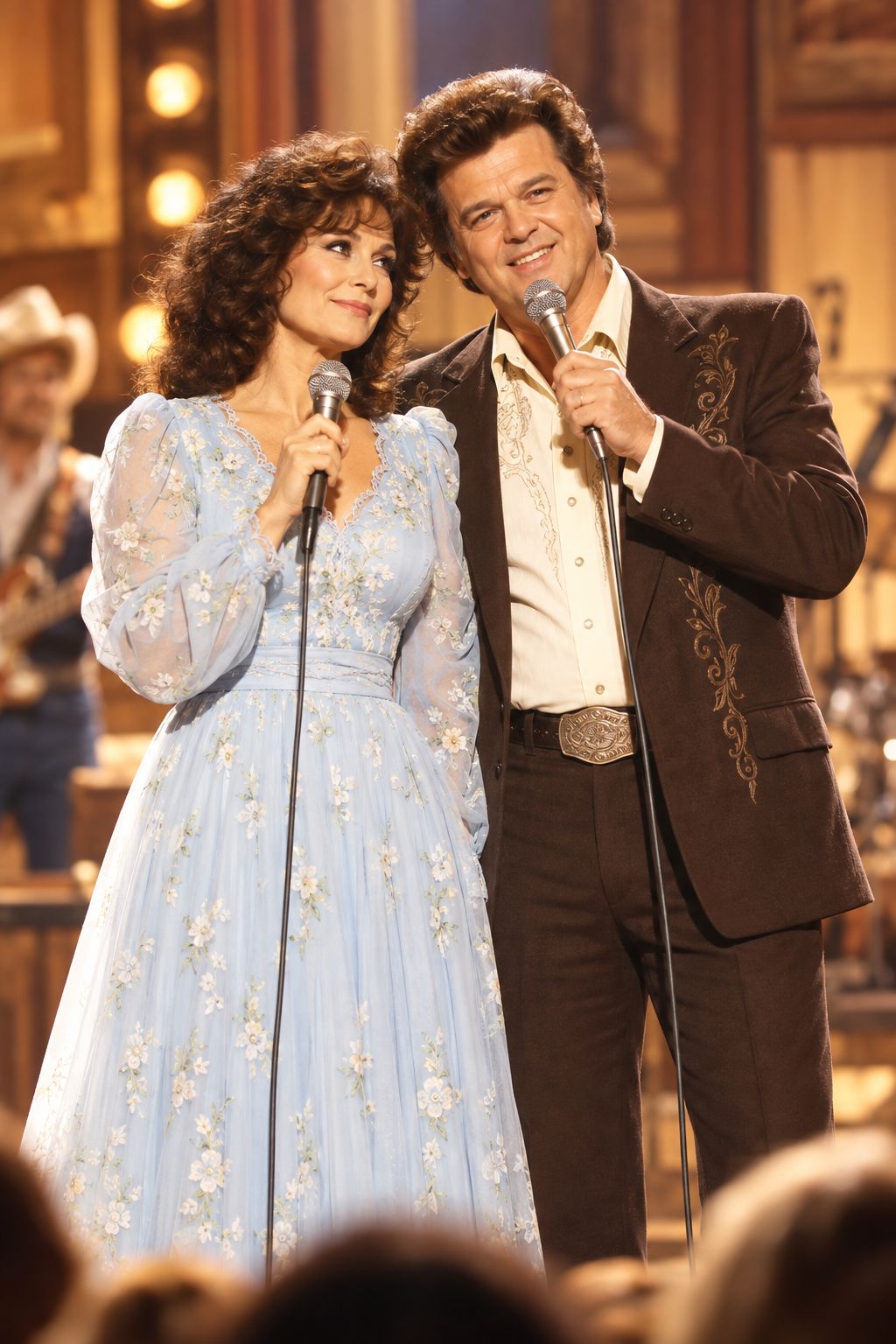
There are country music partnerships that sound good together.
And then there are partnerships that make millions of people wonder if the music is telling the truth.
For more than a decade, Conway Twitty and Loretta Lynn occupied that rare second category. When their voices met, their songs did not feel like ordinary duets. They sounded like conversations overheard behind a closed door—full of temptation, regret, affection, jealousy, humor and longing.
That chemistry created one of country music’s greatest mysteries:
Were Conway Twitty and Loretta Lynn simply brilliant business partners—or was there something deeper between them?
The answer, according to the strongest available evidence, is both simpler and more beautiful than the rumors.
They were not secret lovers.
But they were far more than two singers who happened to share a recording contract.
They were friends, musical partners, business associates and, perhaps most importantly, two performers who understood exactly how to make the other one better.
The Story Began With Mutual Admiration
Long before the rumors, there was admiration.
Loretta Lynn was already a fan of Conway Twitty before they became professional partners. Twitty, meanwhile, had admired Lynn’s talent. Their paths crossed during a European tour in 1969, when they began experimenting with singing together. That informal musical connection eventually became a recording partnership.
What happened next was extraordinary.
Between 1971 and 1988, Lynn and Twitty released 11 studio albums together. They also produced a remarkable string of hit singles, including five No. 1 country singles. Their success was so consistent that they became one of the defining male-female vocal partnerships in country music history.
But the numbers only tell part of the story.
The real magic was what happened when they stood next to each other.
Twitty’s smooth, controlled baritone could sound almost conversational. Lynn’s voice carried a completely different kind of emotional force—earthy, direct and fearless.
Together, they sounded like two people who knew each other’s secrets.
And audiences noticed.
The Rumors Were Almost Inevitable
Imagine being a fan in the 1970s.
You walk into an arena and see Conway Twitty and Loretta Lynn standing side by side. They trade playful remarks. They sing about forbidden love. They stare at each other while performing lyrics about desire and betrayal.
Then they finish the song and laugh together.
For audiences, separating the characters from the people became almost impossible.
The rumors became so persistent that Lynn herself addressed them repeatedly.
“Everybody thought me and Conway had a thing going.”
Then came the part that should have ended the mystery:
“And that’s the farthest from the truth.”
Lynn explained that she loved Twitty as a friend and emphasized how much her husband, Oliver “Doolittle” Lynn, respected him.
Twitty was equally clear.
Contemporary material records him describing Lynn as one of his best friends in the music business while denying that anything romantic had happened between them.
So why did people keep believing otherwise?
Because the music was too convincing.
“After the Fire Is Gone” Changed Everything
Few songs demonstrate their strange ability to blur fiction and reality better than “After the Fire Is Gone.”
The song is not a sweet love story.
It is about two people meeting in secret because the passion has disappeared from their marriages.
That is dangerous territory for any performer.
But Lynn and Twitty didn’t sing it like actors reading lines.
They sang it like two people confessing something they had been afraid to say aloud.
The song became their first No. 1 duet in 1971.
And suddenly, the public had a problem.
How could two married country stars sing about forbidden intimacy with such emotional credibility without listeners assuming some of it was real?
The answer was simple:
They were extraordinary storytellers.
They understood that country music isn’t always about telling your own story.
Sometimes it is about convincing the listener that you have lived the story.
Then Came “Louisiana Woman, Mississippi Man”
If “After the Fire Is Gone” made people curious, “Louisiana Woman, Mississippi Man” turned their chemistry into cultural mythology.
The song was playful, flirtatious and energetic. It gave them room to tease one another vocally while celebrating the impossible attraction between two people separated by geography and circumstance.
The 1973 album went to No. 1 on the country charts, and the title track became another major success.
Interestingly, Lynn’s husband played an important role in that success.
Doolittle Lynn helped find the song for the duo.
That detail matters.
Because the story was never simply Conway and Loretta against the world.
Her husband was not merely standing outside the partnership.
He was, at times, part of the creative ecosystem that helped make it work.
And Lynn later remembered that Doolittle genuinely liked Conway.
That makes the affair rumors even harder to reconcile with the documented history.
They Were Business Partners, Too
The word “business” sometimes makes a relationship sound cold.
In their case, it wasn’t.
Twitty and Lynn understood the commercial value of protecting both their individual careers.
They reportedly decided to limit their collaborative releases so their solo careers would not suffer. Their plan was essentially to make their partnership something special rather than flooding the market with duets.
That was smart.
Very smart.
Instead of becoming two solo artists who occasionally recorded together, they created an event.
A new Conway-and-Loretta album meant something.
A new Conway-and-Loretta tour meant something.
Fans waited for it.
And when they finally appeared together, the chemistry felt fresh.
There was also a genuine business relationship beyond the recording studio. Billboard’s historical account describes Twitty and Lynn becoming business partners and establishing United Talent with others involved in their careers.
So yes—business was absolutely part of their relationship.
But that doesn’t mean the friendship wasn’t real.
In fact, the evidence suggests the opposite.
Their Friendship May Have Been the Secret
Perhaps the biggest mistake is assuming that because they weren’t lovers, their bond must have been superficial.
It wasn’t.
Lynn repeatedly described Conway as a close friend.
Years later, she still spoke warmly about him.
In a 2016 interview, she remembered him as a good man and noted that he loved her husband.
That is important because genuine friendship can create a kind of intimacy that audiences sometimes misunderstand.
Two people can trust one another deeply without being romantically involved.
Two artists can understand each other’s emotional rhythms without being lovers.
And two performers can create convincing romantic tension without ever taking that relationship into their private lives.
Perhaps that was exactly what made Conway and Loretta so powerful.
They could pretend because they trusted each other enough to do it.
The Awards Proved It Wasn’t Just Hype
Their partnership wasn’t simply popular with fans.
It was respected by the country music establishment.
Lynn and Twitty won the Country Music Association’s Vocal Duo of the Year award four consecutive times, from 1972 through 1975.
That recognition matters because their success wasn’t built solely on gossip.
It was built on musicianship.
Their voices fit.
Their timing fit.
Their personalities fit.
Most importantly, their understanding of country storytelling fit.
They knew when to lean into a lyric and when to pull back.
They knew when a glance was more powerful than a vocal flourish.
They knew how to make a simple line feel like a confession.
The Greatest Love Story May Have Been the Friendship
There is a temptation to search for a secret romance because secret romances are exciting.
But sometimes the truth is more moving.
Conway Twitty and Loretta Lynn did not need to be secretly married.
They did not need an affair.
They did not need a hidden love story to justify what audiences felt when they sang together.
The connection was already real.
It simply belonged to a different category.
Friendship.
Professional trust.
Mutual admiration.
Creative chemistry.
And an extraordinary ability to make each other sound better.
As Lynn herself made clear, she loved Conway—but as a friend.
And perhaps that is why their music has survived.
Because what audiences heard wasn’t necessarily two lovers revealing their secret.
They heard two great country artists pretending so convincingly that millions of people forgot they were pretending.
And Then Came Their Final Chapter
Their regular duet partnership eventually slowed as both artists’ solo careers demanded more of their time. They continued to remain friends, however, and their musical connection resurfaced from time to time.
Then, in 1993, fate created one of the most heartbreaking final chapters in their story.
When Twitty became seriously ill and was taken to a hospital in Springfield, Missouri, Lynn happened to be there because her husband was receiving treatment.
Their paths crossed one more time under tragic circumstances.
After years of stadiums, recording studios, television appearances, rumors and laughter, their story was suddenly stripped of all the glamour.
No stage lights.
No microphones.
No playful duet.
Just two people who had shared an extraordinary chapter of country music history.
And that ending makes the entire story feel different.
So, Was It Business or True Love?
Maybe the question itself is wrong.
It was business, because they were professionals who understood how to build a successful musical partnership.
It was friendship, because both repeatedly described their relationship that way.
It was trust, because they could perform emotionally intimate material without allowing the characters in their songs to define their real lives.
And it was a form of love—just not the romantic kind the rumors demanded.
They loved the music.
They loved performing.
They respected one another.
They understood one another.
And they created something together that neither could have created alone.
That may be the deeper truth behind Conway Twitty and Loretta Lynn.
Their greatest love story wasn’t necessarily the one fans imagined.
It was the story of two artists who found a rare creative connection—and protected it long enough for generations of listeners to believe, even for a few minutes, that the impossible romance inside the song was real.
Sometimes the most powerful chemistry in music isn’t proof of a secret romance. Sometimes it’s proof of two people who simply knew how to tell the same story together.
And decades later, when those voices meet again through old recordings, the mystery remains.
Not because the evidence proves they were secretly in love.
But because Conway Twitty and Loretta Lynn were so good at making us feel love that we almost forgot where the song ended and real life began.
VIDEO: