 By admin
INTRODUCTION:
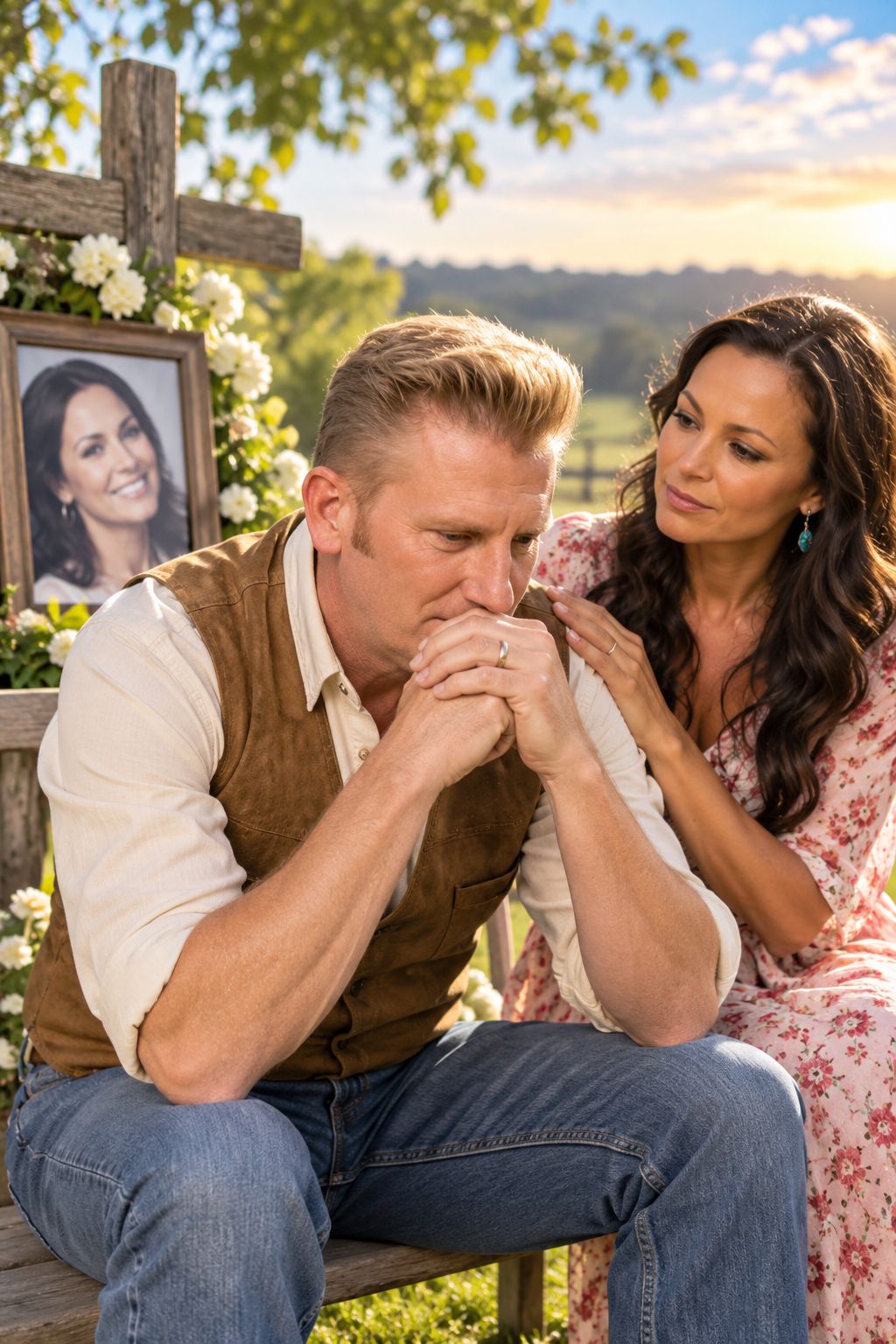
For years, Rory Feek was almost impossible to separate from the image of the grieving husband.
After Joey Feek died from cervical cancer in March 2016 at just 40 years old, Rory became one of country music’s most recognizable symbols of enduring love. He wrote openly about grief, raised their daughter Indiana, preserved Joey’s memory, and repeatedly described himself as a man who remained deeply married to the woman he had lost.
So when Rory eventually found love again, some fans did not see a beautiful second chapter.
They saw a broken promise.
And that emotional divide has never completely disappeared.
The controversy is especially powerful because Rory himself once said things that seemed to leave no room for another romance. In a 2017 interview discussing his life after Joey, he recalled that his wife had encouraged him to consider loving someone again someday—but he initially could not bear the thought.
“It’s OK, honey. You’re still young. You can find someone else and fall in love again.”
Those were reportedly Joey’s words to him near the end of her life. Rory admitted that he did not want to hear them.
At the time, his devotion to Joey appeared absolute.
And that is precisely why his eventual remarriage became such an emotional flashpoint.
The Love Story Fans Thought Would Never End
Rory and Joey were more than husband and wife.
They were musical partners, parents, business partners and, for millions of fans, a portrait of old-fashioned country devotion.
Their story had already carried enormous emotional weight before Joey became seriously ill. Together, they performed as Joey + Rory and built a career around songs that celebrated family, faith, marriage and ordinary life.
Then came cancer.
Joey was diagnosed with cervical cancer in 2014. The disease returned as stage IV in 2015, and the couple documented much of the heartbreaking journey publicly. When Joey died on March 4, 2016, Rory announced her passing with words that became inseparable from the public image of their marriage.
For Rory, grief wasn’t something to hide.
It became part of his life story.
In 2018, more than two years after Joey’s death, Rory told CBS that he still felt married to her.
“I feel just as married and just as in love.”
He also said that Joey remained as much a part of his family’s life as she had been when she was alive.
That statement mattered.
Because fans weren’t simply watching a widower mourn.
They were watching a man who appeared to have made permanent loyalty part of his identity.
“He Said There Would Be No One Else”
Rory’s own writing made the situation even more complicated.
In his memoir and personal writings, he described the extraordinary commitment he had made to Joey during their marriage.
He explained that he had decided there would be no one else—not simply while she was alive, but even after her death.
“I committed to not allowing myself to experience the greatest expression of love that a person can feel without my bride being with me.”
Those words resonated deeply with fans who had followed the couple’s story.
They also created an expectation that Rory himself could not easily escape.
If he had once described eternal romantic fidelity as a deliberate promise, what did it mean when he eventually fell in love again?
That is where the accusation of “betrayal” comes from.
Not necessarily from anything Joey’s family has officially declared—but from an emotional interpretation held by some members of the audience.
To those fans, Rory’s second marriage appeared to contradict the man who had once said he would remain Joey’s forever.
Then Came Rebecca
Eight years after Joey’s death, Rory remarried.
In July 2024, he married Rebecca, a woman who had previously been Indiana’s teacher. The wedding was intimate, held beneath a timber-frame pavilion in Montana, and included Rory’s daughter Indiana.
But Rory’s explanation of how the relationship developed is important.
According to his account, he did not simply decide one morning that it was time to replace Joey.
He said he had feelings for Rebecca but waited to see how Indiana responded.
Then came a moment that changed everything.
Indiana reportedly told Rebecca that she thought Rebecca should marry her father. She also told Rebecca that her mother had been gone a long time and suggested that Rebecca could become her new mother.
Rory said the moment moved him deeply.
“It was her idea.”
And suddenly, the story was no longer simply about a widower finding romance.
It was about a little girl growing up without her mother and potentially finding another maternal figure.
Rory later described the wedding as a moment when Indiana received the gift of having a mother in her life again, Rebecca received the gift of becoming a mother, and the three of them became a family.
Was Joey Actually Betrayed?
This is where the story becomes more complicated than a viral headline suggests.
Joey herself reportedly told Rory that she wanted him to love again.
According to Rory’s account, during the final stages of her illness, Joey raised the possibility of him eventually finding another woman. She understood that he was still young and might have many years left to live.
And in 2026, on the tenth anniversary of Joey’s death, Rory revealed an even more significant detail.
He said Joey had not only accepted the possibility of him finding love again—she had prayed for Rebecca.
Rory wrote that Joey knew the next chapter of his and Indiana’s lives was coming and that she loved them enough to encourage them to find love again. He said Joey had even been praying for Rebecca, despite never meeting her.
That detail dramatically changes the emotional picture.
How can a man betray a wife by doing something she herself reportedly wanted him to do?
Perhaps he can’t.
But emotions rarely obey logic.
The Problem With Putting Grief on a Timeline
Part of the backlash comes from a widespread cultural expectation surrounding widows and widowers:
If someone truly loved their spouse, shouldn’t they remain alone?
The answer is no—but emotionally, many people struggle with that truth.
Grief can make a person feel permanently connected to someone who is gone. Loving another person does not necessarily erase that connection.
Rory’s own life appears to demonstrate that contradiction.
In 2018, he could sincerely say he was still married in his heart.
In 2024, he could sincerely say he was blessed to love again.
Those statements do not necessarily cancel each other out.
They represent two different realities existing at the same time.
Joey was his great love.
Rebecca became his new love.
One does not have to become less important for the other to exist.
Why Fans Still Feel Hurt
Still, the criticism cannot simply be dismissed.
Fans invested emotionally in Rory and Joey’s story. They watched their marriage, listened to their music, followed Joey’s illness and mourned her death alongside Rory.
For some, the relationship became symbolic.
Joey represented an ideal of unconditional love and lifelong commitment.
So when Rory eventually remarried, certain fans experienced something almost like personal betrayal.
They weren’t necessarily angry because he was happy.
They were angry because the story they had believed in changed.
That distinction matters.
Celebrity audiences often become emotionally attached to narratives—not merely people. When the narrative changes, fans can feel as though something sacred has been rewritten.
Rory’s Life Has Never Been as Simple as the Headlines
And there is another reason the conversation surrounding Rory has become increasingly complicated.
His family life has faced serious public tensions in recent years, including disputes involving his older daughters and his youngest daughter Indiana. In 2026, those tensions became especially public after Rory’s older daughters criticized his handling of Indiana’s personal story and medical situation.
Those controversies have added another layer to the way audiences interpret Rory’s public persona.
The “perfect grieving husband” image has collided with the reality of a complicated human being living through complicated family circumstances.
And perhaps that is the most important lesson.
Rory was never a fictional character.
He was a husband who lost his wife.
A father who had to raise a child after devastating loss.
A musician who had to discover who he was without his musical partner.
And eventually, a man who decided he still had enough life left to love somebody.
The Real Meaning of “Moving On”
Maybe the phrase “move on” has always been the wrong phrase.
Because Rory did not move away from Joey.
He moved forward carrying her.
Joey’s music remains part of his story. Their daughter remains a living connection between them. His memories of their marriage remain central to his writing. And even a decade after Joey’s death, Rory continues to speak publicly about the impact she had on him. In March 2026, he described Joey as the bravest person he had ever known and said her impact continued long after her death.
His current personal account likewise describes Rebecca as a gift and says the family continues to build its life around faith, family and their farm.
So perhaps the most heartbreaking part of this controversy is that there may never be a version of Rory’s life that satisfies everyone.
Some fans wanted the grieving widower to remain frozen in the moment he lost Joey.
But Joey, according to Rory’s own account, wanted something different.
She wanted him to live.
She wanted Indiana to be loved.
And she wanted Rory to understand that loving again did not mean loving her less.
“Having loved someone makes having lost them more than worth it.”
That idea, which Rory associated with one of the songs he and Joey wrote together, may ultimately be the key to understanding everything that followed.
Rory Feek’s story isn’t really about choosing between Joey and Rebecca.
It’s about what happens when the person who taught you how to love is no longer physically beside you—and you have to decide whether the rest of your life should be defined entirely by the loss.
Some fans may never forgive him for falling in love again.
Others may see his remarriage as exactly what Joey hoped would happen.
But perhaps the deepest truth lies somewhere between those two extremes:
A second love does not rewrite the first one.
And sometimes, the greatest tribute to a person you lost is not refusing to live again.
It’s having the courage to do so.
VIDEO: